A Researcher Combed 5,834 Bigfoot Reports. Twenty-Five, He Says, Describe the Creature Walking Into Town
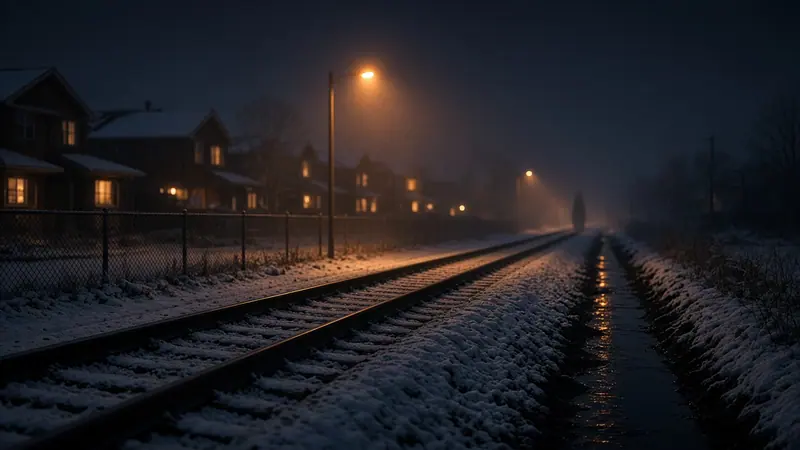
In a paper published Sept. 29, 2026, in the Journal of Scientific Exploration, independent researcher Bruce Champagne says 25 credible reports place a 'relict hominoid' well inside populated areas, mostly at night and in winter, often along ditches and rail lines. He cautions the data are witness reports, not biological records.
Location United States (reports from 14 states, per the Daily Mail)
UNITED STATES (Sept. 29, 2026): On Oct. 20, 1967, Roger Patterson and Bob Gimlin filmed a tall, dark figure striding along a creek bed in the remote woods of Bluff Creek, California. It’s still the most famous Bigfoot footage there is, and the setting fits the legend: wilderness, miles from anyone.
Where it started
The original social media post
-
u/Equal_Night7494 on Reddit
Independent researcher Bruce Champagne published this work in the latest issue of the peer-reviewed Journal of Scientific Exploration. An interesting read that suggests ecological, cognitive, and known-organism models and further future research for studying this phenomenon of Sasquatch (or other reported hairy, bipedal humanoids) entering highly populated areas.
The paper reached r/bigfoot five days before the Daily Mail picked it up.
5 points · 9 comments as of Oct 10, 2026
From the conversation
-
It's cool that a study tackling this particular aspect is published in some capacity, but I'm left wanting a lot more.
-
Very interesting. Thanks for the link.
-
Everyone starts out thinking they're just apes and i think that's where science needs to start to get inquiry into the topic taken seriously.
-
Posts shown as originally published; we don’t verify individual comments. Retrieved . “Load the post here” fetches the original from Reddit, which may set cookies.
A new paper looks at the opposite end of the map. Not the deep woods, but the edges of towns, and in a few dozen reports, well past them.
“Urban incursions by large, undescribed hominoids have been mentioned in historical literature but rarely examined through a consistent analytical framework,” writes independent researcher Bruce Champagne in the Journal of Scientific Exploration. His study, published Sept. 29, 2026, tries to supply one.
What we know
On the record: documents, statements, dates and places. Sources below.
- The paper. “The Urban Relict Hominoid: An Analysis of Incursions into Populated Areas” is a brief report in Vol. 40, No. 3 of the Journal of Scientific Exploration. The journal, published by the Society for Scientific Exploration, specializes in subjects outside mainstream science. Champagne is listed as an independent researcher in behavioral ecology and zoological studies; the Daily Mail describes him as a retired police officer.
- The method. Champagne reviewed 5,834 reports “drawn from three public databases and the author’s research records.” Per the Mail, the databases are Oregonbigfoot.com, the John Green archive and the Bigfoot Field Researchers Organization.
- The filter. He looked for sightings at least 0.40 kilometers, about a quarter-mile, inside populated areas. Forty-two qualified. Twenty-five, or 59.5%, met his credibility threshold, which the Mail says weighed multiple witnesses, observer credibility, distance and duration.
- The numbers. According to the abstract, those 25 incursions occurred in areas averaging 2,118 people per square kilometer, above the U.S. city average of 1,600. The mean distance inside was 2.83 kilometers, about 1.75 miles, and the deepest was 12.55 kilometers, nearly 8 miles.
- The pattern. Winter and nighttime incursions predominated, unlike in older datasets such as John Green’s, and “lightly built individuals” were overrepresented.
- The caveat. The abstract says it plainly: “Because the dataset is based mostly on archival witness reports rather than independently verified biological records, the findings should be interpreted cautiously.”
What’s claimed
Accounts, testimony and theories, as told by the people who tell them.
- Where and when. Per the Daily Mail’s summary, the 25 reports span 14 states, led by Illinois, Ohio, Utah, New Jersey and Colorado. They peak between 2006 and 2015 and between midnight and 3 a.m., and the figures were often seen along drainage ditches and railway lines.
- Seasons and build. The Mail reports that 36% of encounters happened in winter, 27% in autumn, 23% in summer and 14% in spring, and that while 40% of witness accounts called the creature “massive,” one in five described it as “lightly built.” The Mail doesn’t make clear whether those splits cover the 25 urban reports or a wider set.
- What it means. Champagne describes “a pattern of rare, apparently intentional, largely solitary, nocturnal, corridor-based incursions that may be consistent with flexible decision-making.” Comparing the reports with known primates and large mammals, the abstract offers several possible explanations, “including food acquisition, dispersal, exploratory behavior, and responses to anthropogenic landscape change.” The Mail adds his suggestion that winter food scarcity could push the creatures toward people.
What readers said
The paper reached Reddit’s r/bigfoot on Oct. 5, posted by u/Equal_Night7494, who called it “an interesting read.” The reaction there was polite but wanted more. “It’s cool that a study tackling this particular aspect is published in some capacity, but I’m left wanting a lot more,” wrote u/Sasquatch_in_CO, who asked for fuller breakdowns of the travel corridors in the reports. u/TheFaceOfSasquatch24 backed the approach: “Everyone starts out thinking they’re just apes and i think that’s where science needs to start.”
The limits
The paper studies reports, not animals, and its author says so. Every incursion it counts began as someone’s account of what they saw, collected by volunteer databases with their own standards. As the Daily Mail notes, despite thousands of reported sightings, no physical evidence has been presented publicly that scientists say proves the species exists.
What the study does is treat those accounts as data and ask whether they hang together. Champagne says they do: rare, nocturnal, largely solitary, and following corridors such as ditches and rail lines, behavior he compares with that of known primates and other large mammals near people.
The anniversary
The anniversary of the Patterson-Gimlin film is a reminder of how much of the Bigfoot story still rests on a few seconds of footage from 1967. Champagne’s paper rests on thousands of reports instead, and narrows them to 25. In those, the figure isn’t striding across a creek bed in the wilderness. As the witnesses tell it, it’s at the edge of the streetlights, at night, in winter, more than a mile inside town.
Sources
- The Urban Relict Hominoid: An Analysis of Incursions into Populated Areas (opens in new tab) · Journal of Scientific Exploration, Vol. 40 No. 3 (2026), pp. 365 to 375 Brief report by Bruce Champagne, published Sept. 29, 2026. Figures in this story marked as the paper's come from its abstract.
- Bigfoot sightings across 14 US states reveal an eerie pattern sparking claims a creature is hiding nearby (opens in new tab) · Daily Mail Oct. 10, 2026. Source of the state, season and time-of-day breakdowns attributed to the Mail.